When the Norman’s settled here they soon recognised a never-ending supply of water from two local streams would be ideal to power the mill
Two streams – one in Ilston Valley and called Pennard Pill – deliver a reliable flow to the mill. Pennard Pill has never been know to run dry because it is fed by springs from an extensive underground cave system beneath the valley of Paro Le Breos. The Normans, not just famed for building solid castles, were good at developing practical buildings like Mills too. They diverted water down this man-made channel, called a ‘leat’ to ensure the tow could be delivered in a controlled way.
Later on you will be able to follow the path alongside the leat, beyond the Woollen Mill, to the weir.
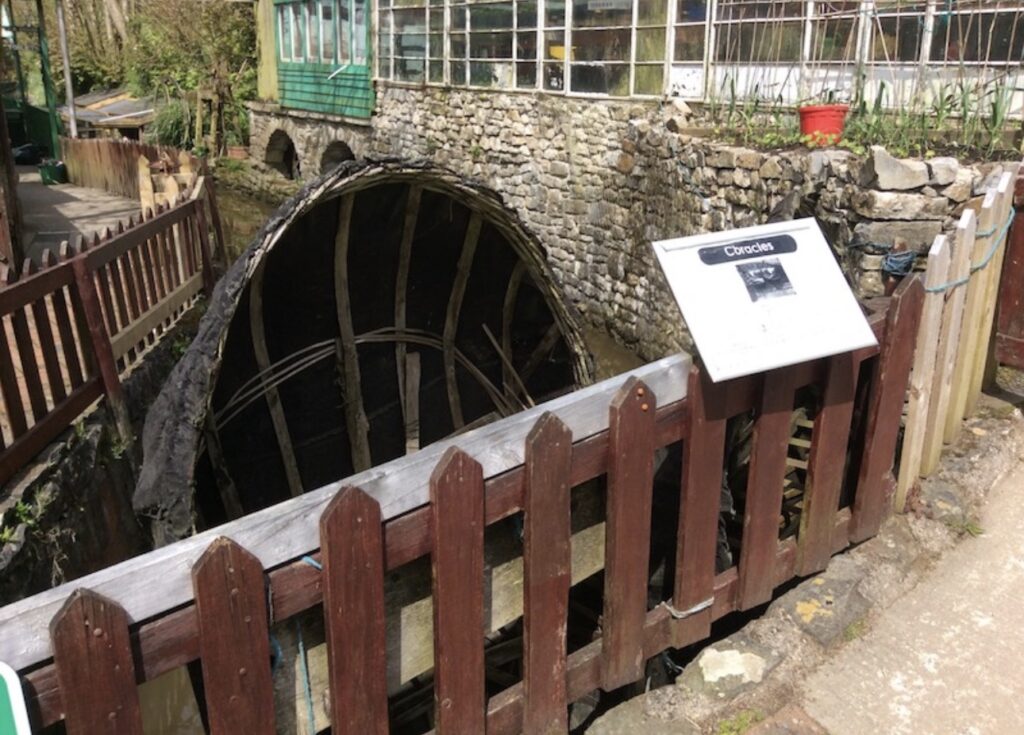
Coracle Display
This display of Coracles in the Mill Leat are examples of an ancient Welsh fishing vessel, and still in use on several rivers in West Wales.
Demonstrations are performed during the holidays and visitors are welcome to try for themselves with the aid of our staff. If you’re Interested in a Coracle demonstration please ask at reception for times and more information.
3000 year -old boats
The Coracle was believed to have been invented by our Celtic ancestors over 3000 years ago. We know that Julius Cesar saw these boats and had copies made on his expeditions to Britain. The design of the boat has hardly changed over all those years. Made from willow and hazel and designed to be very light and flat bottomed, the boats are ideal for working in shallow tast flowing water and were used by the Celts as a means of crossing rivers and fishing. The “skins” of the boats were originally made from the hide of a full grown cow but from the 16th century it became more common to use a cloth skin painted in tar to get the same waterproof qualities as a cow hide.
Each area of Wales would have its own slight different design. In Gower we know that Teifi coracles from Carmarthen were in use. There are still people fishing with these boats today and normally fishing is done in pairs using a long net strung between two boats following the tide or current in the river. We also give fishing demonstrations with the nets at different times of the year.
Have you heard the legend of Prince Madoc?
There is a legend that coracles of larger sizes were used for longer sea voyages between Wales and Ireland, and beyond. In the 13th century Prince Madoc from West Wales is believed to have taken a small fleet of Coracles from Lundy Island and out into the Atlantic, eventually reaching America. He never returned but one tribe in America – The Mandan Indians – who were found on the river Ohio in the 18th century had a boat built to a very similar design of a coracle (they were called buffalo boats). Their own legends refer to contact with white skinned people who wore dragon tattoos – the emblem of Prince Madoc. So maybe a Welsh Prince did discover America hundreds of years before Christopher Columbus?
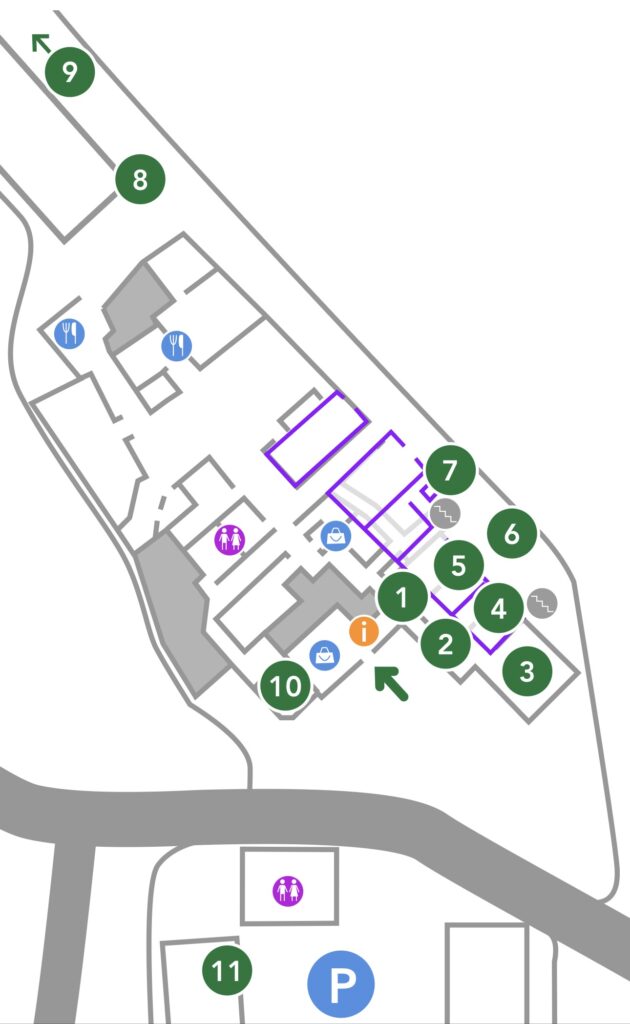
Directions to next stop
Before exploring along the mill leat, make your way into the woodturner’s workshop on your left hand side.