A History of Gower and The Mill
Gower: A Distinctive Peninsula
The Peninsula of Gower is only 15 miles long (east to west) by about 6 miles wide (north to south), although the historic region of Gower also included a lot of land inland to the north-east. While many people have heard of the little England beyond England in South Pembrokeshire, Gower remains an enigma. Until the outbreak of the Second World War, it was still largely a region of small farming communities with its own dialect and traditions. Its unique character was forged from its mix of Welsh, Somerset/North Devon and Norman ancestry.
Many words of the dialect were similar to those found in the West Country. Gower can be divided into the “Welsherie” in the north, where Welsh was spoken, including the communities of Penclawdd and Llanrhidian, and the English or “Gower” speaking districts of southern Gower and Llangennith in the north-west.
The Origins of the Corn Mill
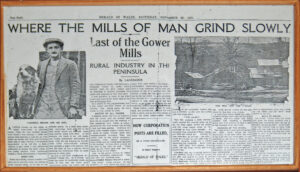
A Corn Mill was established on this site sometime during the 12th century, as part of the estate belonging to the powerful Le Breos family, who were granted sovereignty of Gower by King John in 1203. The first written references to the Mill appear in government records from about 1300 onwards.
The Le Breos family established Parc Le Breos, a deer park of about 500 acres on land to the west of Parkmill, used for both deer hunting and military training. Significant parts of the park can still be found today. It is likely that the Mill was established as part of the park development, serving the needs of the locality by grinding oats for animal meal and barley for daily bread.
The Mill was a “custom” or “toll” mill. Local farmers were compelled to bring their corn to the Mill for grinding and pay proper dues to the estate. Failure to do so could result in fines imposed by the sessional court.
The Le Breos hold over Gower was under constant threat from both rebellion and lawsuits, particularly from the de Newburg family of Warwick. Their predecessors had controlled Gower after the Norman conquest but lost their lands and estates to King John when he asserted his authority as guardian to a minor member of the family.
When the Norman Lords took control of this area of Gower, they not only built Pennard Castle but also brought farmers from North Devon and Somerset to replace the Welsh inhabitants. This began the close links between Gower and the opposite side of the Bristol Channel, connections that can still be traced through place names, family names and the old Gower dialect, which shared many words and a similar accent with those found in Somerset and Devon.
These links continued through the centuries, including the limestone trade of the 18th and 19th centuries and the copper ore shipping trade of the 19th century connecting Devon, Swansea, Prince Edward Island and South America.
If you want to find out more about the history of this fascinating region, there are some great publications available, many produced by the Gower Society.
The Woollen Mill
John Grant: The Man Behind the Mill
Though it is not known exactly where he came from, research suggests that John Moore Grant was born in 1757 to a cotton weaver on the west coast of Scotland. By the time he reached adulthood, Scotland, like the rest of Britain, was being transformed by the Industrial Revolution.
With mechanisation changing the textile industry, unrest grew among spinners and weavers. The Calton Weavers Strike of the 1780s and 1790s coincided with Grant’s departure from Scotland. As an established manufacturer, he faced increasing competition from larger urban businesses and may have looked for opportunities elsewhere. South Wales offered access to quality wool, established trading links across the Bristol Channel and a location suited to his commission to produce red flannel military blankets during the Napoleonic Wars.
Establishing the Parkmill Woollen Manufactory
Much of the land in Parkmill was owned by the Duke of Beaufort. Records show that Park Place and Stone Mill were leased to John Grant in 1804, after which he acquired additional land within the village. Scotch pine trees, associated with the Grant family, were planted around Park Place and remain today.
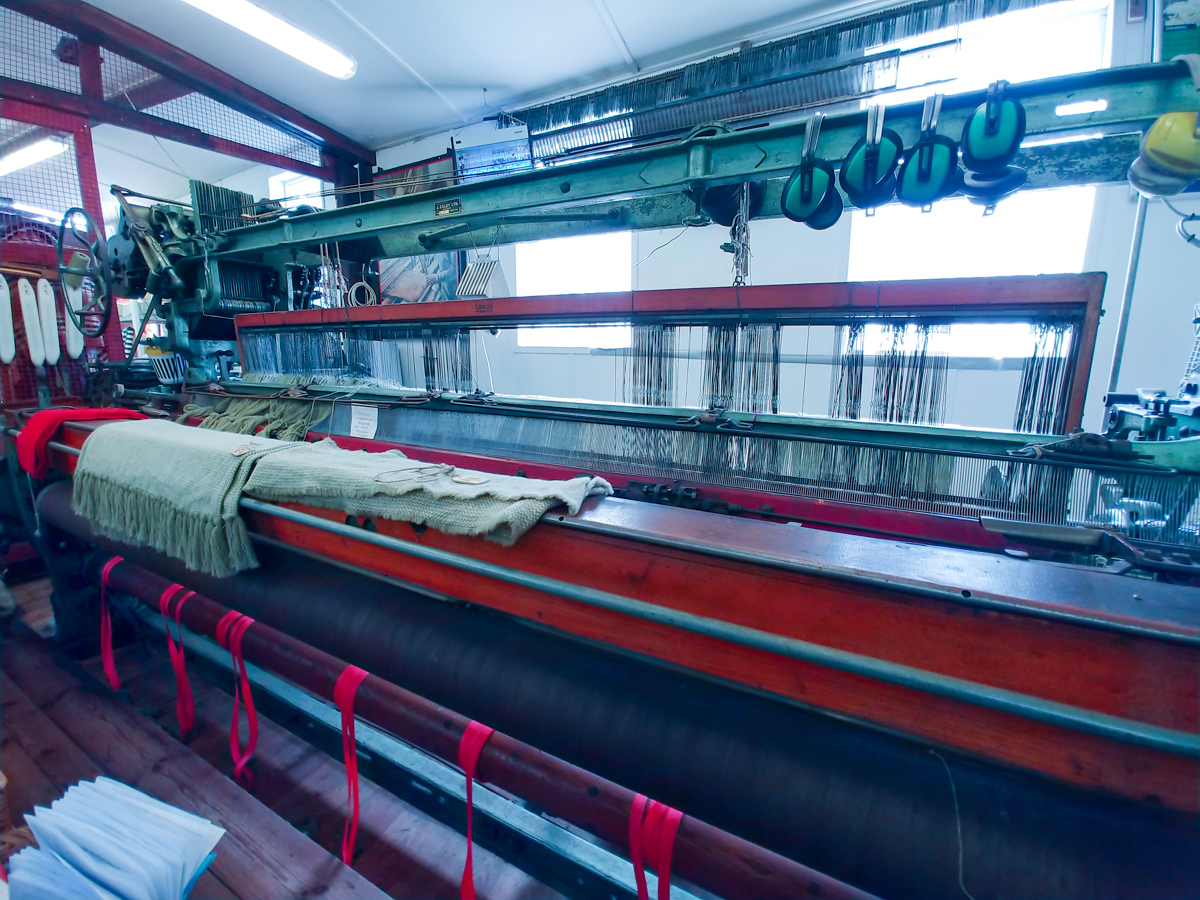
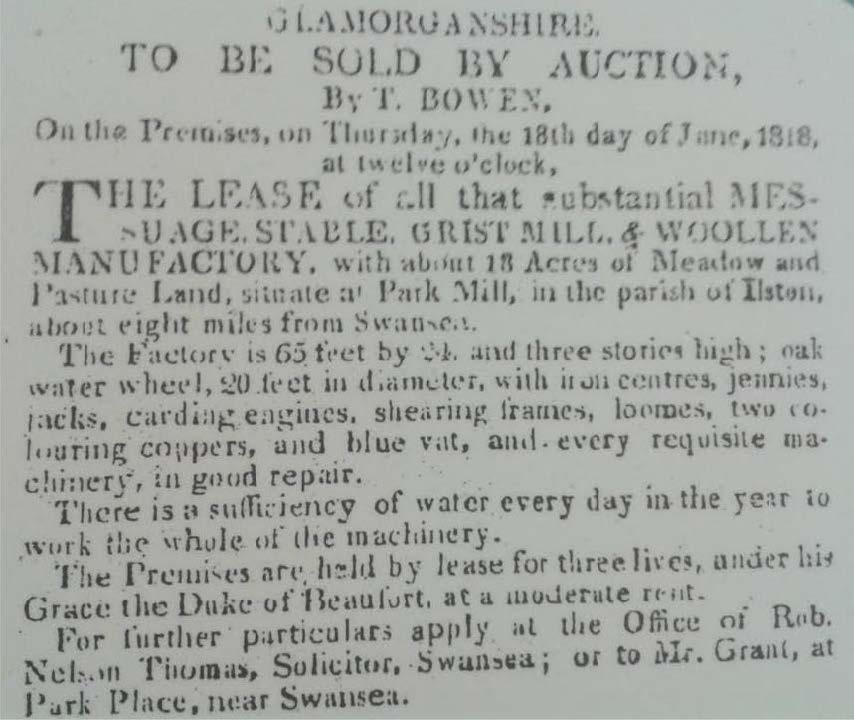
By 1807, the Parkmill Woollen Manufactory was in operation. The site included a three-storey building measuring 65 feet by 24 feet, equipped with a 20-foot oak wheel, carding engines, shearing frames, looms and colouring coppers, together with a dwelling house next door now known as Park Place.
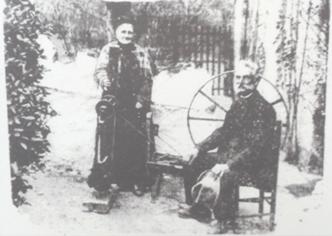
The business employed and trained local people, including members of the Tanner family, who continued weaving and spinning in North Gower into the 1930s. Several weavers’ cottages were also built in Parkmill, some of which can still be seen today. Contemporary newspaper reports praised the success of the enterprise and suggested it continued to expand in its early years.
Decline, Closure and Legacy
The manufactory faced a major setback in 1815 when a cargo ship carrying a significant quantity of uninsured stock was lost in a storm off Oxwich Point. This coincided with the end of the Napoleonic Wars, which brought an end to the military blanket commission that had supported the business.
Grant attempted to sell parts of the enterprise and later portions of his land in order to clear debts and rent arrears. By 1825, Park Place, two grist mills, a smiths forge and a cottage were offered for sale, although there was no mention of the woollen manufactory itself. It is possible that the mill and its equipment had already been sold.
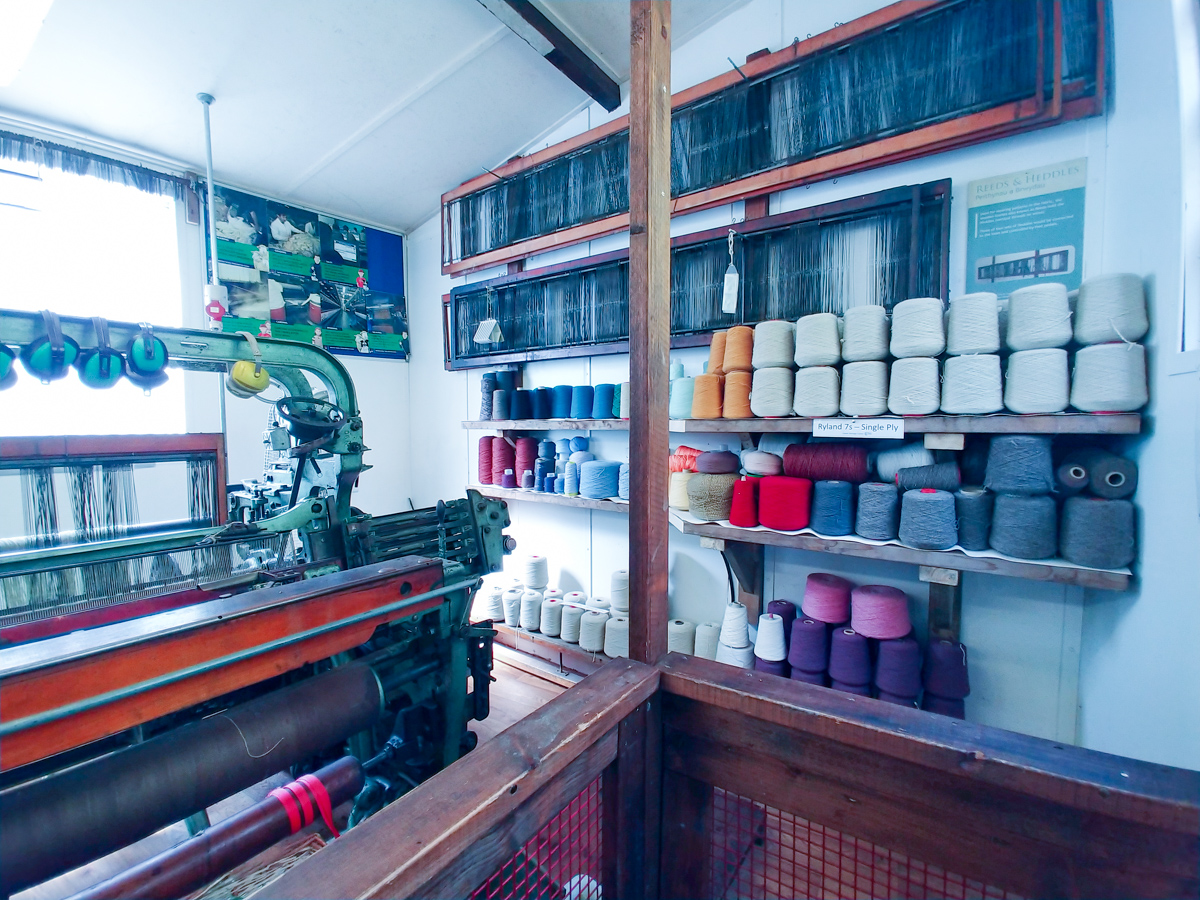
Grant remained in Parkmill for the rest of his life, continuing as a member of the local community until his death in 1845. No other woollen manufactory or working mill was established in Park Place. Today, the Gower Heritage Centre preserves this history through weaving and spinning demonstrations, displays of original blanket designs and the recreation of traditional Gower woven patterns.